Wednesday, August 7, 2019

The Magicians


Aedres

The reel was frozen - hadn’t been used in a year. Attempting to let out or rewind the fine nylon line elicited fingernail on the blackboard sounds. If that wasn’t enough, a dozen or so curlicues of line sprouted from within the reel’s inner workings. The prospect of having to untangle them sealed its fate. I now considered the rod & reel history and destined for land fill. No worries, it was an inexpensive kid-type assembly bought for my grandkids so they could dangle a worm at lake’s edge, hoping  to hook a Sunny. But my friend Aedres really wanted to fish. Undeterred he started what I already considered a no-win salvage operation. To Aedres, the land fill destined apparatus was actually the best rod & reel …. it was the one he had, the only one around. I knew he faced more salient realities before this episode. What he proceeded to do next reminded me of one late Havana afternoon when a Cuban guy shared a secret as I gawked at his showroom worthy ‘56 Chevrolet. What was it?


my Cuban car guy friend and Chevy in Havana


Despite The Embargo on American exported parts imposed after the 1959 Cuban Revolution, my Cuban friend kept that Chevy looking like the classic it was and still on the road sixty years after rolling off General Motors’ assembly line. “So what’s your secret, how do you do it?”, I asked. With an impish smile and sparkle in his eye he said, “it’s magic ….. and we’re all magicians.”

Magicians never reveal secrets or tell you how their tricks are done, but there are exceptions. This was one - when I first approached this self-declared wizard doting on his classic, it was the wheel from somewhere bolted onto the steering shaft that I quickly took note of. Definitely not a Chevrolet issued option. Eclectic would be a good descriptor. Same could be said for the non-regulation hub caps. Could a potion of imagination, ingenuity, and skill to create after-market necessities be this Cuban car guy’s magic? Could be, but what about the tires? They appeared original, US made, and pristine. Since a stroll down to the local Sears or Goodyear to buy new tires was a non starter, how did my wizard friend pull that rabbit out of the hat? Turns out he didn’t have to go tire shopping, his son-in-law in Canada did. And there’s no Cuban embargo for our northern neighbor! After a little intra-family commerce you can connect the dots. The emerging picture reveals a glimpse into the various sleights of hand keeping a vintage US fleet, seemingly stuck in a 1950s time warp, still rumbling through Havana’s streets. 


Long before I first witnessed Cuban auto magic, similar magic was at work for me. In my case the magician was Ana. She performed her wizardry during twenty years working seamlessly by my side. Aside from her absolutely fabulous smile and fastidious work ethic, her specialty was fixing things. Ana hails from the Azores. There she understood one didn’t simply toss out the old and buy new when the current set up became disabled. You replaced a gasket or hose or found some other way to put a hobbled apparatus back into service. In short, you fixed it. 


Ana and her husband Julian. Julian is from Colombia. 
They met while at school in MA. They’re special people. 
Our country needs more like them.


Now back to the lake to check on Aedres’ against all odds effort to actually catch fish with that landfill destined rod. 

Aedres quickly assessed the reel needed surgery. That meant opening it up to reveal inner organs, effect a repair, then close the patient up. That’s what he did. Ignoring the grating sounds when unscrewing the reel halves, Aedres patiently and in orderly fashion disassembled a mélange of sand encrusted nuts, washers, and some other unidentifiable parts comprising the reel’s guts. As I remained mesmerized he cleaned and re-assembled the inner workings leaving no extra pieces. Impressive, to say the least. But what about the sprouting curlicues of line? For this ailment, he did resort to the scalpel … actually a pocket knife. Rather than untangle too many knots and tangles to be counted, with my assistance we excised the blockage to yield unencumbered line. Voilà, the rod and reel was ready, fish beware. 
After a field test, or rather a lake test, Aedres handed the rod to his son Hamoudie. Hamoudie could now cast, but he was intent on catching the bait sized fish swimming right by the shore. It didn’t take long before he did. Although a half dozen more similar catches were needed before he could fill a sardine can, Hamoudie was happy. So was Aedres.  It was magical.


Pictured, in size order - Me, Hamoudie, and his ‘sardine’.
photo credit: Aedres


Afterword:
In case you’re wondering, Aedres is from Syria. When Assad’s bombs made his neighborhood more dangerous than the uncertain journey to a safer place Aedres and his family would have to undertake, they fled to Turkey. As Kurds, Turkey was not a welcoming respite, but it wasn’t lethal. As you can surmise, during the journey there was often no supply chain for necessities. To manage, it took imagination, ingenuity, and skill, traits the Cuban car guy and Ana share. They are the essential amino acids of functioning in their respective worlds. 

I wish no hardship on anyone, but as our planet’s air, water, and landfills begin to cough up all that we have loaded into them for so long, we should take a page from and be inspired by the enterprise of my trio of magicians to repair, reuse, recycle, and re-purpose. No magic required.


Visit my web site anytime to view other Galleries, Photo-essays, and read previous blog-posts, then kindly share on social media. Thank you.


images © David Greenfield


Thursday, May 2, 2019

107984


107984 - just a number you say. Perhaps a random selection as the whirring digital display on your electric meter’s dial suddenly froze while clicking off kilowatts being consumed. 
107984 - a meaningless number in the big scope of all things important and one easily forgotten. But for Norbert Wollheim, the numbers could never be forgotten — they were tattooed on his forearm.

Who was Mr. Wollheim and why were the 107984 digits, now carved in stone and placed atop the face of an unassuming cement block building, being formally unveiled to the public?  And why was I witness to the ceremony? The answer begins when a letter addressed to my father arrived one day originating from the Federal Republic of Germany.

What do they want from me, what now?” An invisible vice gripped his chest and his gut soured as he steeled himself before unsealing the envelope. My father had long since tried to expunge memories of the pains seared into his body and soul at the hands of Germans. He worried he would soon need a nitro to ease the building pressure. But the letter’s message did not require medicinal intervention, it elicited excitement, albeit a nervous one. The text detailed an invitation, an invitation to come to Frankfurt and be present when Norbert Wollheim would be posthumously honored on the tenth anniversary of his passing, date TBD. Acceptance meant my father would receive VIP treatment with the entire trip on the German Republic’s Deutschmark. To my shock, paying no heed to his inner demons or frailties of his eighth decade, my dad in no uncertain terms said, “I want to go”

Why, I thought, considering all the hurdles to overcome and despite Germany being the country he vowed never to set foot in, did he suddenly need to go? I did know one thing; if he was set on making the journey, I was going with him. 

But the question still hovered, Who was Mr. Wollheim? 

Norbert Wollheim (1913 - 1998)

Here’s where the story begins …. Norbert Wollheim grew up in an assimilated Berlin Jewish family. By his teen years he was already committed to the social justice work of Germany’s Jewish youth movement. After high school that passion was channeled into law studies which would enable his continued advocacy. But those career dreams ended in 1935 as the National Socialists (Nazis) then in power imposed laws prohibiting Jews from owning businesses and attending schools. With the noose further tightening around civil liberties and freedoms remaining for the Jewish community, Wollheim devoted himself tirelessly to organizing the Kindertransporte, a system of rail transport ferrying Jewish children at risk to safe havens in England and Sweden. The Gestapo caught up and arrested him and his young family in 1943 - they were sent to Auschwitz. Wollheim’s wife Rosa and their 3 year old son were immediately gassed. Wollheim was funneled to the Buna/Monowitz section of the camp to provide slave labor for IG Farben, a chemical cartel collaborating with the Nazis to produce synthetic fuel and rubber for German forces. 


In Buna, Norbert Wollheim, activist and aspiring attorney, was inked with a new  identity, 107984


A few months later after the war enveloped my father’s town, he was shipped to Buna, branded with a number, and along with Wollheim and thousands of other prisoners, thrown into the slave labor force for IG.  

9.43    KZ Buna Monowitz/Auschwitz

At war’s end both men were liberated. They and the other Buna/Monowitz survivors would start new lives and new families in different corners of the world. Norbert Wollheim chose to remain in Germany where he immediately resumed his advocacy, this time for needs of the hundreds of thousands of Displaced Persons (DPs). He continued his involvement in rebuilding community and also testified in several post-war trials. By 1951with virtually all the DPs repatriated, Wollheim considered his work done. Reluctant to see his children grow up in Germany, he emigrated with his second family to the US. But before leaving he filed an unprecedented action against IG Farben. He sued the company seeking compensation for his years of forced labor. When the judgement was rendered three years later; the court ruled in his favor. During the appeal process an out-of-court global settlement was reached forcing IG to pay millions of Deutschmark to the several thousand former Buna laborers. 

So it was that Norbert Wollheim was to be honored with a memorial in his name on the University of Frankfurt campus, near a complex that had been IG Farben’s HQ during the war.  My father was among the survivors located who received an invitation to be present. Sadly he did not live to make the journey by the time plans for the memorial dedication were finally completed. The invitation however was passed on to me to go in his place. I know my father would have wanted it.  

Former IG HQ on the Goethe Universitat campus in Frankfurt

Epilogue:

107984 - the 6,000,000 - just numbers you might say … hardly. Each one stands for a man, woman, or child. Each of their lives represented a world of possibilities. On this Yom HaShoah, Holocaust Remembrance Day 2019, we should make time to reflect on that tenet; respecting and placing value on every life. Our world might then become a better place. 


Visit my web site anytime to view other Galleries, Photo-essays including the full account of my experience in Frankfurt (Liberated ... but Not Yet Free), and read previous blog-posts, then kindly share on social media. Thank you.


images © David Greenfield

Friday, March 22, 2019

Relationships


John and Joey

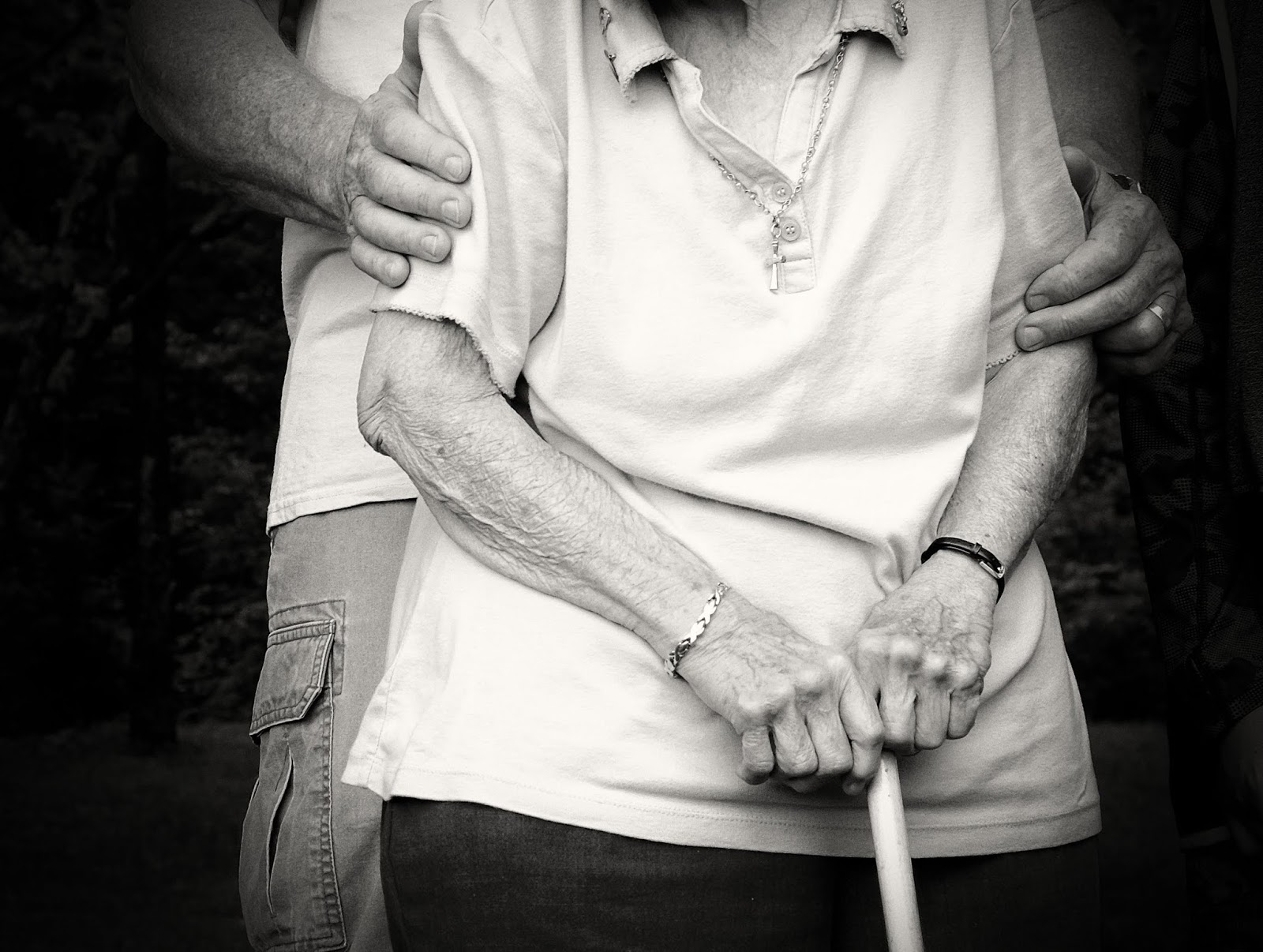
It is often said that to succeed in this world it’s ‘who you know, not what you know’. A follow-up axiom is that relationships and friendships made as we page through the chapters of life, not facts learned, material goods, or toys amassed, are what matters most. 

Bottom line: the formula for a good life - a successful, meaningful, and satisfyingly rich one - incorporates solid relationships forged and nurtured along the way. And what better way to start the process than by leaning on and learning from those closest to us. The Relationships image selections in this Photo-blog post capture moments between family members or friends who have developed strong ties over a lifetime or are at the inception of creating them. All of the individuals pictured are well positioned on the path to a good life.  


As part of a joint photography exhibit, an additional group of my Relationships images  will be on display at Arts Wayland & @theW Gallery - 60 Andrew Avenue, Wayland during the month of April. The opening reception is planned for Thursday evening April 4th from 6:30 to 8 PM. I hope you can join us, everyone is welcomed.

Hands and Feet

Visit my web site anytime to view other Galleries, Photo-essays, and read previous blog-posts, then kindly share on social media. Thank you.

images © David Greenfield

Wednesday, January 16, 2019

Decisive Burst


Jogging to the Altar

Every day the Boston Globe, whether print, web, or mobile app version, selects images capturing moments which draw us in. But once a year the Sunday magazine publishes the photo editor’s best of the best picks.The assembled photographs are a stunning collection of Decisive Moments, a term coined for truly outstanding images by legendary photojournalist/street photographer Henri Cartier-Bresson (HCB). When HCB sensed his head, eye, and heart were aligned on the same axis, he pressed the shutter of his Leica camera to frame images for the ages. How can today’s pros, or anyone for that matter, perform similar magic? During a recent evening program with a few Globe photographers speaking about their best of the best, I learned one technique - Decisive Burst. 

So what’s a Decisive Burst

It’s a sequence of exposures - three, five, seven, or more - produced at the click of the shutter button. Somewhere in the series, there’s likely to be a decisive split second yielding the perfect photo. During the film era a camera equipped with a motor drive attachment could automatically advance film rapidly for each exposure. Today a simple digital ‘burst’ menu setting achieves the same result. 

'I Am Not Throwing Away My Shot'. For a pro on assignment, those lyrics from the Broadway sensation Hamilton must ring true. Typically he/she has one shot, one opportunity to deliver the sought after newsworthy goods to the editor before deadline. Among this year’s best of the best, the photographers had several challenges to endure in plying their craft so impressively - braving a nor’easter’s pelting rain, wading into flood waters in hip boots, arising in frigid pre-dawn hours searching for the right light, or renting a single-engine plane to circle above shark infested waters. They may have had only one shot, and they didn’t want to throw that opportunity away. In situations like those, the Decisive Burst technique may have come in handy to achieve praiseworthy results. It’s also a reason to marvel at so many of those memorable B&W film images from back in the 20th century captured brilliantly without a mechanized burst. Those classic images framed our vision of the era. 


Consider Alfred Eisenstaedt's famous "Kissing Sailor" photograph on V-J Day in Times Square (August 14, 1945). The world war was over and tons of confetti were raining down on thousands of ecstatic New Yorkers.

The Kiss 1945
credit - Alfred Eisenstaedt

In Eisenstaedt’s account, he was meandering through the celebrating crowds hunting for pictures when he noted a sailor alternately strutting and staggering down Broadway grabbing any female he could and kissing them. Eisie (as Eisenstaedt was affectionately known) then noticed a nurse in whites within the scrum but also in the sailor’s path. Anticipating an opportunity he kept running ahead with a hunch the kissing sailor would grab the nurse wearing her standout whites. As suspected, he did. With the seaman’s hand sweeping into the small of her back, she braced, arched backward with a bent knee and a pointed toe for balance just as the sailor’s kiss was planted. Click! Eisenstaedt later reflected that contrast between the dark uniform and white dress coupled with his camera vantage point and composition gave this Decisive Moment photo its extra impact. Other cameramen worked the crowd that day and recorded many images of the kissing sailor’s antics, but none captured the jubilation and spirit of the day as brilliantly as Eisie. 

Around the beginning of the new millennium I crossed the digital divide leaving the film era planted solidly in my rear view mirror. Although I could then click liberally limited only by the camera battery’s juice, I continued to approach image capture as if the camera was loaded with a roll of film and fixed number of exposures. This mindset continues today always prompting me to rely on techniques found in master photographers’ tool kits - attention to composition, anticipation of action, seeking the optimal camera angle, and ‘getting the exposure right’ in the camera. I do not rely on photo editing to salvage images in the digital darkroom. In other words, work to align head, eye, and heart before pressing the shutter button. When that triad is assembled, it’s a ‘burst’ of pride.


Here’s a sample of my best of the best. There’s more in my web Gallery, Decisive Moments.

More Than Food for Thought


Here's Looking at You, Kid
Not Under, On the Boardwalk


Anxious Anticipation


Support Service

Visit my web site anytime to view other Galleries, Photo-essays, and read previous blog-posts, then kindly share on social media. Thank you.

images © David Greenfield


Wednesday, December 26, 2018

Fire and Light

Independence Park, Tel Aviv

The Camp Fire, the Woolsey Fire, the Hill Fire - California was ablaze. For what seemed like an eternity, the conflagration spewing smoke and ash was out of control with no end in sight. A hundred people died as thousands upon thousands of acres along with hundreds of homes were charred and consumed by the inferno. The Town of Paradise was decimated, it’s now gone, history. 

Needless to say, the awesome power of fire has been on my mind as of late. But so has the light that emanates from combustion. Why?

For eight nights earlier in December my family started a fire each night. No worries, it was a very limited, controlled fire. We started by striking a match to light one small candle then added another each night until eight were lit. We do that at this time of year, every year to mark Hanukkah, the Festival of Lights. The holiday celebrates the successful revolt over two thousand years ago of the Maccabees, a Jewish band of rebels, against the Syrian king Antiochus who outlawed Judaism in his empire and defiled the Temple in Jerusalem. After the Temple was cleansed and rededicated, its iconic candelabrum, the menorah, needed to be lit so it could burn through the night, and every night thereafter. Only pure olive oil could be used for this sanctified purpose. Search as they might, the Maccabees could find only one flask enough for but one night. As the story goes, miraculously the sacred fire lasted eight days, hence the eight nights of the Hanukkah festival.


But why is this fire and the light it sheds different from all others? 
Answer - As it is written, the fire is one that must only illuminate and not consume. Jewish texts make clear the candles need to be separated at least by a finger’s breadth to ensure the flames will not join together to be ‘like a bonfire’. Hanukkah lights must be distinct so each becomes a point of light set against the darkness. What better time to gaze into the flickering flames than at this time, the darkest of year.      


In contrast to the ominous glow of the California blazes which can be seen from far above Earth, the light emanating from fire which I’ve been gazing at and thinking about is one that does not consume and destroy, it only illuminates, it warms the heart, it inspires. 

With devastation from the other fires of war and hate raging on our planet, that seemingly impermeable darkness needs to be pierced by the illuminating light of Hanukkah. It’s light we need to bring into our world and sustain.


Visit my web site anytime to view Galleries, Photo-essays, and read previous blog-posts, then kindly share on social media. Thank you.


all images © David Greenfield

Wednesday, November 14, 2018

Jericho

Shofar - the biblical trumpet

‘Joshua fit de battle of Jericho
Jericho Jericho
Joshua fit de battle of Jericho
And the walls come tumblin’ down’


It’s a catchy tune about a familiar story - a populace on the march supported by a surge of trumpet blasts and committed to a mission to bring down the imposing walls of the city of Jericho. The events are emblematic of the Battle of Jericho, the first in the eventual conquest of the Promised Land. The song is certainly captivating and the story, as told in the Book of Joshua, is well known. Trouble is, archeologists subsequently excavating in Tell es-Sultan, i.e., biblical Jericho, approach unanimity in concluding the events as described never happened! But hasn’t history taught us that assemblies of men and women united in their determination are indeed capable of causing impenetrable walls of all stripes to come tumbling down? Not sure? Think Berlin Wall. Think breaching of walls to pass the Civil Rights and the Voting Rights Acts. Think millions voting with their feet during the March on Washington, Mother’s Day Marches, and Selma to Montgomery. 


Tuesday, September 25, 2018

Unfinished Business


If you wait for perfection, you’ll wait an eternity.

While marveling at an artist friend in the throes of layering brushstroke upon brushstroke to her opus-in-the-making, I noted how often what I thought was an endpoint would be summarily made history by new paint layers …. then newer ones. Before my eyes, the creation was continually transmogrified from one perceived finale to another, prompting me to ask, when do you stop and announce - finis? To which she replied, ‘you’re never really finished.’  

What! Don’t we relish placing a virtual ✔︎ next to a creation completed or even a job well done? Isn’t this type of unfinished business unsettling? It is for me.


Unfinished business weighs in with greater heft as the new year 5779 now begins for Jews throughout the world. It is a time for individual reflection on conduct during the past year - what was proudly accomplished and what was left undone or unsaid - and how to effect meaningful personal and societal changes in the year ahead. It also marks the time the Book of Genesis will soon be re-read. Genesis, the first of the Five Books of Moses, recounts as the name implies, Creation. Chapter One describes God’s separation on Day One of an unformed darkness into heaven and earth and subsequent command, ‘Let there be light.’ But it wasn’t until Day Four that God actually made the two great lights set in heaven to give light upon the earth; the greater light to rule day, and the lesser to rule the night. What then of ‘the Light’ from Day One? 
As it is written in Jewish commentary, perhaps that ‘light’ was actually the light of ‘awareness.’ The illumination we think of as measured in watts and lumens came later, on Day Four. But a problem arose; apparently those lumens never completely arrived. Their special delivery vessel suffered a breakup on the way. Fragmented shards with light still trapped inside were scattered to the four corners. Fortunately most of the divine light was reconstituted, but the illumination and the inherent goodness locked within dispersed fragments remained missing. Until it is released to join the reconstituted beams, the miracle of Creation remains …… Unfinished business. 


This is where we humans come in charged with gathering the stray points of light and harnessing its power to repair what is broken in the world. Although a daunting, if not impossible undertaking, a way forward can be found in the lyrics of poet/author/singer/songwriter Leonard Cohen’s classic work,  Anthem

there is a crack in everything 
(there is a crack in everything)
that’s how the light gets in  

Light which streams through the cracks can show us the way.

Cracks in our world

And what is that light called? Answer - Tikkum Olam.
And what is Tikkum Olam comprised of? Answer - Acts of kindness, charity, and efforts to improve society. In short, to effect repair we are called to always do good and always do the right thing. 
Even Mr. Rogers knew that, “We are all called to be Tikkun Olam, repairers of creation.”


Granted, these days the world’s brokenness seems to be expanding at warp-speed. Even making a dent in the journey toward an outer orbit of Perfection will require an eternity of lightyears. Alas, this Unfinished business will frustratingly always remain unfinished business. But there can be no alternative other than to plod ahead. 

Need encouragement for the long arduous journey? Look no farther than these timeless words of wisdom for motivation: 

“You are not obligated to complete the work, 
but neither are you free to desist from it.” 
Ethics of Our Fathers 2:21

Waiting for perfection - waiting an eternity - unfinished business …. no problem!
Onward.

Visit my web site anytime to view Galleries, Photo-essays, read previous blog-posts, then kindly share on social media. 

all images © David Greenfield