Saturday, January 11, 2020

Is One Day Still Acceptable?


“Why post this blog now?”
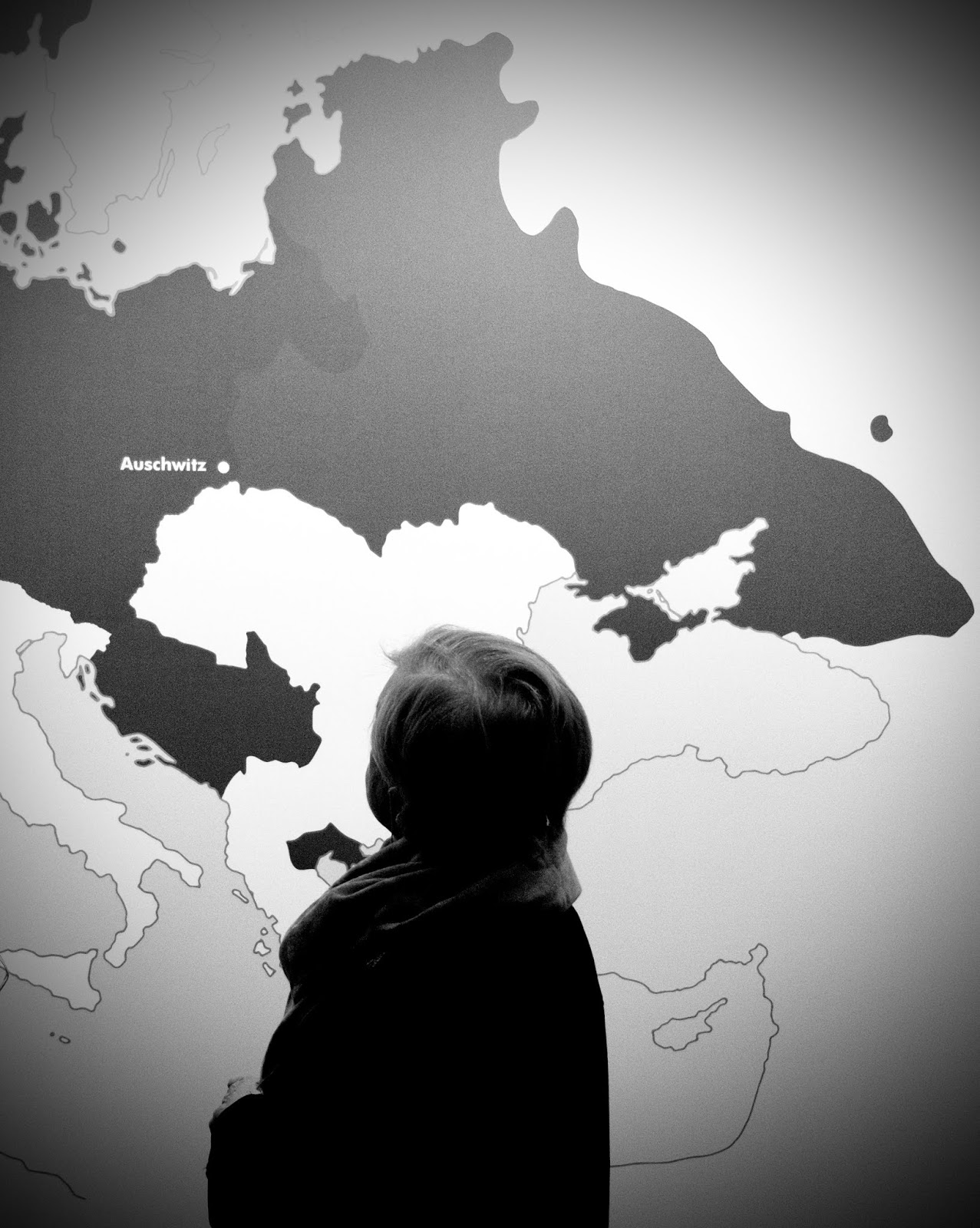
The question was addressed to me a few years ago upon distribution of the blog post Unintended Journey on May 1, 2016 (1). It came as a complete surprise, and to my dismay. That posting delved into an emotionally searing experience I had while visiting Germany, a country I always believed I would never set foot in. The timing for release of the post was a day or two before Holocaust Remembrance Day, and was intentional. I considered the post’s message quite à propos for the day’s sacred imperative of remembrance. This year’s annual commemoration of the Holocaust is still months away, so why revisit this prior episode now?

For starters, let’s take a step back to get a 20/20 perspective of recent events, events now reverberating with history. On streets, in synagogues, homes, or stores, whether at night or in daylight, in small towns or cities, in the East or in the West, Jews are being viciously and often fatally assaulted. This pattern was unimaginable a decade ago. It’s more than sobering, it’s shocking. 

Is it prelude to the experience of other Jewish communities throughout diaspora history, those in Spain, Egypt, Poland, and Iraq? Is setting aside but a single day annually for remembrance still acceptable?
Not that long ago, German Jews were at the apex of their existence. As in the US today, they achieved admirable successes in science, the arts, academics, jurisprudence, and in government. Tragically, within a few short years the community’s upward bending golden arc was shattered. Nazis masterfully blamed Jews for Germany’s ills and as their troops goose-stepped across Europe, they orchestrated destruction of Jews throughout the continent. Jewish society plummeted  from its apex. 


Wehrmacht on the move

When the smoke cleared and details of the decimation entered public awareness, Never Forget became the rallying cry of Holocaust Remembrance and was seared into our consciousness.


Shoes collected from victims as they prepared for 'disinfection showers’ 
upon arriving at Auschwitz

Yet in 2018, seventy plus years later the Holocaust Knowledge and Awareness Study commissioned by the Conference on Jewish Material Claims Against Germany found many adults already lacked basic knowledge of what happened. In fact, 41% of Americans and 66% of millennials did not know what Auschwitz is

A subsequent 2019 American Jewish Committee study found that a third of American Jews were hiding their Jewish identity out of concern over their safety. What is happening? Is setting aside but a single day annually for remembrance still acceptable?


Gaping archway of Birkenau, Auschwitz II
One and a half million people passed through the entrance, they left as ash through the chimneys

History is a way of knowing the past. Done right, it reveals the present and illuminates the future(2).

If one subscribes to this postulate, it’s not a stretch to conclude we are not doing it right. Pretending this time in history will be different is not a strategy. The resurgence of anti-Semitism could be a result, in part, of the vanishing legacy of the Holocaust. The recent spate of violent anti-Semitic acts demand a paradigm shift in action. 

Es Brent (It is burning) was the rallying song of partisans who brought the fight to the Nazis. The chilling lyrics describe a town on fire and admonishes brothers in arms to not merely stand and look, but to take up the tools to put out the fire. So, what tools do we have for deployment now?

Here’s what our community leaders have advocated:
  1. Stepping up education of youth by parents and teachers for understanding that hateful acts will not be tolerated
  2. Holding social media outlets accountable for what they publish
  3. Lobbying elected officials and law enforcement agencies to improve safety and security at our institutions, and to vigorously prosecute crimes followed by handing out tougher sentencing 
  4. Standing together with people of all backgrounds so it is understood an attack on one is an attack on all. Hatred that may start with the Jews never ends with the Jews.

Make no mistake: Anti-Semitism is not a Jewish problem; anti-Semitism is an American problem and a global, human problem. Anti-Semitism is, at its core, an expression of a society’s need to have an ‘other’ to define its own identity and to blame for its troubles, whatever they may be, in any given period'. (3)

Everyone has a role to play if hate is to be beaten back to under the rocks from which it has slithered out. It remains to be seen which action each of us will take. 
Action will illuminate the future.



An umbrella day outside the Museum of Jewish Heritage in NYC.
The Auschwitz Exhibit is currently on display.
  1. Unintended Journey 
  2. M. Vogel - President, Lower East Side Tenement Museum. The institution teaches about and honors the diverse waves of immigrants who arrived at our shores and went on to help build America. 
  3. Marc Baker (President CJP), Jeremy Burton (Executive Director JCRC), and Robert Trestan (Regional Director ADL). Op-Ed, Boston Globe - January 3, 2020

If this blog-post was meaningful for you, kindly send a link to your circle of family, friends, and colleagues and share on social media. You can also visit my web site anytime to view other Galleries, Photo-essays, and read previous blog-posts. Thank you.

                                                                         all images © David Greenfield

Saturday, December 14, 2019

Slow dancing - Part II

La Tour Eiffel

Wind the film, dial in the exposure, focus, then click
That’s how you ‘slow dance with a film camera,’ …. and smell roses. It’s the point where I left off in my previous blog post.


“So what do you do in Paris at night?”

For some world travelers the question might conjure up all the raucous offerings of night time in Gay Paris - a front row seat at les Folies-Bergere, or catching a few kicks from the Can-Can madamoiselles at le Moulin Rouge, or some other hotspot for peut-être (perhaps) a je ne sais quois salacious pursuit. 

This query, however, was directed to Alfred Eisenstaedt, the beloved German-American photographer whose memorable images while on assignment graced the cover of Life almost one hundred times during the magazine’s heyday. Incredible! Eisie, as he was affectionately known, was a proponent of the recently introduced compact, versatile 
35 mm Leica camera. He mastered use of available light, even at night, shunning flash units attached to the bulky press cameras relied on by many of his contemporary photojournalist colleagues. 

Eisenstaedt’s answer to the query, So what do you do in Paris at night?, although a natural for him, wouldn’t satisfy anyone who was interested where in Gay Paris he hung his hat, or clothes, when the lights went down. 

Eisie responded with, f-2 at a thirtieth


St. Louis Children's Museum

If you take photos with a phone or select auto on your digital camera and are not conversant with manual camera settings, f-2 refers to the lens aperture, or opening diameter. This component, functioning like the iris of your eye, regulates light entering the camera. Eisenstaedt’s thirtieth refers to the camera’s blink, i.e., speed of the shutter’s opening and closing. The aperture/shutter speed combination determines exposure, the quantity of light hitting the camera’s digital sensor or film. Since there is no auto setting on the Leicas Eisenstaedt used nor my 1950 model Leica, I was taught to evaluate the day’s light, i.e., is it an f-4 at a one-hundredth or an f-11 at a five-hundredth type of day? Aperture and shutter speed dials were then rotated to the determined selections, i.e., the camera was programed if you speak digital-ese, prior to composing, focusing and finally clicking. 


Old Route 10, Grantham NH

Unlike image capture using today’s digital marvels, you had either 24 or 36 shots on the camera’s roll of film, not the virtually limitless number of shots available to the digital photographer. Clearly, instant gratification was not part of the equation. There were also developing and printing steps to complete before the image was seen. Even with the advent of the Polaroid and instant photography there was a minute or so delay before a small square print was slowly extruded from the camera’s innards. Imagine, instant then meant having to wait a whole minute! Clearly the film camera experience with its limits on the number of clicks, real processing costs, and delayed gratification in viewing, requires patience leading to a more deliberative process than the seemingly limitless, immediate, no cost point & shoot options commonplace today.  


Central Park, NY
                                  

As I continue the adventure of meandering on a film-camera déjàs vue all over again path, I find I am more selective with subject matter and spend more time composing before clicking. But when all goes according to plan, I am particularly buoyed with the results. 

Not everyone can dust off a favorite or nostalgic old film camera like I did and try shooting a roll, but everyone who points & shoots with a camera of any kind, can try to do the slow dance. Just imagine your device has only so many clicks before you’re out of ‘film’. Try it, you may savor the experience, and even note a pleasant floral essence in the air. 

Strasbourg, France

all images are Leica images © David Greenfield

Visit my web site anytime to view other Galleries, Photo-essays, and read previous blog-posts, then kindly share on social media. Thank you.

Sunday, November 24, 2019

Feelin' Groovy


Mozeying Down the Line


In their 59th Street Bridge song, aka Feelin’ Groovy, Simon & Garfunkel implored each of us to slow down, you move too fast. Sounds good and refreshing, but given our penchant for always choosing the fast lane, I’m confident everyone will also agree with the following regarding pace …..

One saves time traveling only two hours 
instead of spending eight hours 
on the same journey


The theorem at play here is that speed and time accelerate in parallel although opposite directions, i.e., the faster you go, the shorter the time to get from Point A to Point B, or with due respect to Ben Franklin’s admonition, haste makes waste, the faster, and carefully you work, the quicker the task is completed. 

True, but what about the roses? Can you smell them at all while traveling or working feverishly at warp-speed, or must you move at moseying down the road speed  to savor the floral esters?

Pint Size Mozeying

So here’s my premise - experiences can be enhanced when time is expanded rather than collapsed. A required slowdown to smell the roses may be easy to accept, but hard to implement, especially in today’s instant messaging, tweety, I want to have it all and I want it now world!

Make no mistake, I’m not advocating a return to a time when composing and recording important thoughts required banging the keys of a Smith-Corona typewriter and reliance on white-out for typos, or to watching a rabbit ear antenna B&W TV with a twelve inch screen, but I do enjoy many moments back in the analog world. Two such pleasant experiences involve writing personal letters with a vintage fountain pen and, as you might imagine, periodically capturing images with an old film camera. 

For this posting, let’s consider pen and ink. 

Back in my twentieth century junior high school, we learned and practiced cursive writing, frequently using a fountain pen for in-class hand-in assignments. If your pen ran dry, you raised a hand to get permission to go to the communal ink well and fill ‘er up. Considering this practice, gifting a fountain pen, usually boxed with a matching mechanical pencil, was a go-to, if not pedestrian, gift for all the bar mitzvah boys of the era. Naturally when my rite of passage arrived I received my share. That said, I did receive a classic - a sleek black and gold Sheaffer pen. The unique innovation of this writing implement was the snorkel. When filling, rather than immersing the nib into a murky well and mucking it up with gobs of ink, you merely twisted the pen’s end cap and a tube emerged from under the tip to suck in the fluid. The nib remained pristine.

Nib and Snorkel

Of course longhand writing was to become an endangered species almost completely replaced by the keyboard. The key phrase here is ‘almost completely’. Not long ago I learned that when a friend’s signature was required, he reached for a pen handsomely perched on his desk and reserved exclusively for such occasions. It elevated the signing to an almost spiritual experience. The story tugged at me. I then recalled that somewhere in my attic I too had a special pen. Thus began a mission to find it, restore it to functionality, and most importantly use it when special words, words from the heart, as well as my signature were needed. 

Google searches are unquestionably completed much faster than mine but after a methodical expedition through decades of stowed memorabilia, I located the archived Sheaffer and blew off the dust. Clearly, it was in sad shape but still appeared salvageable, a task suited for the experts at Bromfield Pen - established 1948 in Boston. A week or two later the pen was returned to me with a new nib and pliant rubber ink bladder. Life had been breathed into my bar mitzvah pen. 

Today, whenever poignancy of a written word is the right way to go, albeit not the fastest, I fill ‘er up and savor every thoughtful writing moment regardless how long it takes to complete. Afterward, my signature is affixed, the paper folded into an envelope, then I ‘press send’, i.e., drop the missive into a snail-mail box. When I do, even without fresh flowers anywhere nearby, somehow floral esters waft into the air and I smell roses. Today, ‘sunshine in my pocket’ may be a more apt descriptor of that feeling than groovy, but call it what you will, it’s a feel good feeling.


Next time I’ll focus on slow dancing with a film camera.

Leica IIIg circa 1950


Visit my web site anytime to view other Galleries, Photo-essays, and read previous blog-posts, then kindly share on social media. Thank you.


images © David Greenfield

Monday, August 26, 2019

A New, New Colossus?


Preface - This is about America’s past, its national pastime, and its future.

“Do you want to see Hank Greenberg’s bat? How about a Sandy Koufax autographed baseball?” 
We’re talking about Hank Greenberg, the legendary Tiger slugger who led the way in Detroit’s capture of the American League championship in 1940. Sandy Koufax, is the venerated three time Cy Young Award winning Dodger southpaw, and another legend in his own time. 

Not really expecting to view, no less hold, holy grail level baseball memorabilia in the place we envisioned holding only stacks of books and documents, we responded,  … “Sure”. That was “Sure” albeit with the slight uncertainty of a defense mechanism mounted to avoid major disappointment. We didn’t think the items would actually appear. But moments later there they were. Was it all a dream? 
Not at all, but then where were we?

Answer: on NYC’s lower west side on a private tour of the American Jewish Historical Society (AJHS), the oldest cultural archive in the US. The institution houses millions of documents and tens of thousands of books, photographs, art, and artifacts all reflecting the history of the Jewish presence in America since colonial times. It’s a mind-boggling collection.

The Society considers what it has amassed to be no less than the future of the American Jewish past. 

The future of the past’ - That mission statement gave me pause to reflect. Recalling William Faulkner’s haunting quote, “the past is not dead, it’s not even past”, AJHS’ vision of itself serving as custodian of a living past is a lot to chew on. 
No worries, I decided to take a bite and chomp on it. But for now, back to baseball.

Growing up as members of the Brooklyn faithful who loved its borough’s Dodgers, my wife and I were blown away with what we held in our hands. The archive housed even more Koufax and Dodger baseball stuff to savor. But the elation quickly paled in comparison to what happened next. Our guide brought out and let us turn the pages of another AJHS gem, the original journal in which Emma Lazarus entered her most famous sonnet. That’s the Emma Lazarus who wrote, 

"Give me your tired, your poor, 
Your huddled masses yearning to be free"

The New Colossus

There it was, in pen and ink, in her own hand, The New Colossus, her composition written to raise money for construction of the pedestal for the Statue of Liberty. 

Emma Lazarus' words always inspired Americans to see their country as one welcoming the stranger. The poem was so intertwined with Lady Liberty's symbolism, it was cast onto a bronze plaque and mounted inside the pedestal's lower level. After all, unless you're Native American, we were all strangers arriving here at one time.


Sadly, that lofty vision who we are is under attack. Right out of an Orwellian playbook, Ken Cuccinelli, Acting Director of US Citizenship and Immigration recently suggested Lazarus' poem should be changed in order to restrict entry to only those among the tired and poor "who can stand on their own two feet and who will not become a public charge". He actually said that! I'm confident Cuccinelli, always sporting his stars and stripes lapel pin, holds these truths to be self-evident - that all men are created equal. Today, I'm also confident he understands that tenet to mean - but some men are created more equal than others


So much for the purity of Emma Lazarus' view of Lady Liberty's welcoming light at the entrance to New York harbor .... 

A Mighty woman with a torch, whose flame 
Is the imprisoned lightning ..... 
From her beacon-hand 
Glows world-wide welcome 


Cuccinelli wants to re-write history to reshape the future. This step would extinguish Lady Liberty's flame leaving her in a fog, a mere shadow of who she was and what she represented. The wordsmithery would put a smile on Big Brother's usually dour face. Cuccinelli wants a New, New Colossus
       For everyone descended from families originating on distant shores, that re-write is no less than a shot across the bow, a Code Red. We can't allow it. It won't be easy, but if there's a will, there's a way. Let's find our own way to find that way. 

This is about America’s past ….. and its future.

*****************************************************************************
Visit my web site anytime to view other Galleries, Photo-essays, and read previous blog-posts, then kindly share on social media. Thank you.


images © David Greenfield


Wednesday, August 7, 2019

The Magicians


Aedres

The reel was frozen - hadn’t been used in a year. Attempting to let out or rewind the fine nylon line elicited fingernail on the blackboard sounds. If that wasn’t enough, a dozen or so curlicues of line sprouted from within the reel’s inner workings. The prospect of having to untangle them sealed its fate. I now considered the rod & reel history and destined for land fill. No worries, it was an inexpensive kid-type assembly bought for my grandkids so they could dangle a worm at lake’s edge, hoping  to hook a Sunny. But my friend Aedres really wanted to fish. Undeterred he started what I already considered a no-win salvage operation. To Aedres, the land fill destined apparatus was actually the best rod & reel …. it was the one he had, the only one around. I knew he faced more salient realities before this episode. What he proceeded to do next reminded me of one late Havana afternoon when a Cuban guy shared a secret as I gawked at his showroom worthy ‘56 Chevrolet. What was it?


my Cuban car guy friend and Chevy in Havana


Despite The Embargo on American exported parts imposed after the 1959 Cuban Revolution, my Cuban friend kept that Chevy looking like the classic it was and still on the road sixty years after rolling off General Motors’ assembly line. “So what’s your secret, how do you do it?”, I asked. With an impish smile and sparkle in his eye he said, “it’s magic ….. and we’re all magicians.”

Magicians never reveal secrets or tell you how their tricks are done, but there are exceptions. This was one - when I first approached this self-declared wizard doting on his classic, it was the wheel from somewhere bolted onto the steering shaft that I quickly took note of. Definitely not a Chevrolet issued option. Eclectic would be a good descriptor. Same could be said for the non-regulation hub caps. Could a potion of imagination, ingenuity, and skill to create after-market necessities be this Cuban car guy’s magic? Could be, but what about the tires? They appeared original, US made, and pristine. Since a stroll down to the local Sears or Goodyear to buy new tires was a non starter, how did my wizard friend pull that rabbit out of the hat? Turns out he didn’t have to go tire shopping, his son-in-law in Canada did. And there’s no Cuban embargo for our northern neighbor! After a little intra-family commerce you can connect the dots. The emerging picture reveals a glimpse into the various sleights of hand keeping a vintage US fleet, seemingly stuck in a 1950s time warp, still rumbling through Havana’s streets. 


Long before I first witnessed Cuban auto magic, similar magic was at work for me. In my case the magician was Ana. She performed her wizardry during twenty years working seamlessly by my side. Aside from her absolutely fabulous smile and fastidious work ethic, her specialty was fixing things. Ana hails from the Azores. There she understood one didn’t simply toss out the old and buy new when the current set up became disabled. You replaced a gasket or hose or found some other way to put a hobbled apparatus back into service. In short, you fixed it. 


Ana and her husband Julian. Julian is from Colombia. 
They met while at school in MA. They’re special people. 
Our country needs more like them.


Now back to the lake to check on Aedres’ against all odds effort to actually catch fish with that landfill destined rod. 

Aedres quickly assessed the reel needed surgery. That meant opening it up to reveal inner organs, effect a repair, then close the patient up. That’s what he did. Ignoring the grating sounds when unscrewing the reel halves, Aedres patiently and in orderly fashion disassembled a mélange of sand encrusted nuts, washers, and some other unidentifiable parts comprising the reel’s guts. As I remained mesmerized he cleaned and re-assembled the inner workings leaving no extra pieces. Impressive, to say the least. But what about the sprouting curlicues of line? For this ailment, he did resort to the scalpel … actually a pocket knife. Rather than untangle too many knots and tangles to be counted, with my assistance we excised the blockage to yield unencumbered line. Voilà, the rod and reel was ready, fish beware. 
After a field test, or rather a lake test, Aedres handed the rod to his son Hamoudie. Hamoudie could now cast, but he was intent on catching the bait sized fish swimming right by the shore. It didn’t take long before he did. Although a half dozen more similar catches were needed before he could fill a sardine can, Hamoudie was happy. So was Aedres.  It was magical.


Pictured, in size order - Me, Hamoudie, and his ‘sardine’.
photo credit: Aedres


Afterword:
In case you’re wondering, Aedres is from Syria. When Assad’s bombs made his neighborhood more dangerous than the uncertain journey to a safer place Aedres and his family would have to undertake, they fled to Turkey. As Kurds, Turkey was not a welcoming respite, but it wasn’t lethal. As you can surmise, during the journey there was often no supply chain for necessities. To manage, it took imagination, ingenuity, and skill, traits the Cuban car guy and Ana share. They are the essential amino acids of functioning in their respective worlds. 

I wish no hardship on anyone, but as our planet’s air, water, and landfills begin to cough up all that we have loaded into them for so long, we should take a page from and be inspired by the enterprise of my trio of magicians to repair, reuse, recycle, and re-purpose. No magic required.


Visit my web site anytime to view other Galleries, Photo-essays, and read previous blog-posts, then kindly share on social media. Thank you.


images © David Greenfield


Thursday, May 2, 2019

107984


107984 - just a number you say. Perhaps a random selection as the whirring digital display on your electric meter’s dial suddenly froze while clicking off kilowatts being consumed. 
107984 - a meaningless number in the big scope of all things important and one easily forgotten. But for Norbert Wollheim, the numbers could never be forgotten — they were tattooed on his forearm.

Who was Mr. Wollheim and why were the 107984 digits, now carved in stone and placed atop the face of an unassuming cement block building, being formally unveiled to the public?  And why was I witness to the ceremony? The answer begins when a letter addressed to my father arrived one day originating from the Federal Republic of Germany.

What do they want from me, what now?” An invisible vice gripped his chest and his gut soured as he steeled himself before unsealing the envelope. My father had long since tried to expunge memories of the pains seared into his body and soul at the hands of Germans. He worried he would soon need a nitro to ease the building pressure. But the letter’s message did not require medicinal intervention, it elicited excitement, albeit a nervous one. The text detailed an invitation, an invitation to come to Frankfurt and be present when Norbert Wollheim would be posthumously honored on the tenth anniversary of his passing, date TBD. Acceptance meant my father would receive VIP treatment with the entire trip on the German Republic’s Deutschmark. To my shock, paying no heed to his inner demons or frailties of his eighth decade, my dad in no uncertain terms said, “I want to go”

Why, I thought, considering all the hurdles to overcome and despite Germany being the country he vowed never to set foot in, did he suddenly need to go? I did know one thing; if he was set on making the journey, I was going with him. 

But the question still hovered, Who was Mr. Wollheim? 

Norbert Wollheim (1913 - 1998)

Here’s where the story begins …. Norbert Wollheim grew up in an assimilated Berlin Jewish family. By his teen years he was already committed to the social justice work of Germany’s Jewish youth movement. After high school that passion was channeled into law studies which would enable his continued advocacy. But those career dreams ended in 1935 as the National Socialists (Nazis) then in power imposed laws prohibiting Jews from owning businesses and attending schools. With the noose further tightening around civil liberties and freedoms remaining for the Jewish community, Wollheim devoted himself tirelessly to organizing the Kindertransporte, a system of rail transport ferrying Jewish children at risk to safe havens in England and Sweden. The Gestapo caught up and arrested him and his young family in 1943 - they were sent to Auschwitz. Wollheim’s wife Rosa and their 3 year old son were immediately gassed. Wollheim was funneled to the Buna/Monowitz section of the camp to provide slave labor for IG Farben, a chemical cartel collaborating with the Nazis to produce synthetic fuel and rubber for German forces. 


In Buna, Norbert Wollheim, activist and aspiring attorney, was inked with a new  identity, 107984


A few months later after the war enveloped my father’s town, he was shipped to Buna, branded with a number, and along with Wollheim and thousands of other prisoners, thrown into the slave labor force for IG.  

9.43    KZ Buna Monowitz/Auschwitz

At war’s end both men were liberated. They and the other Buna/Monowitz survivors would start new lives and new families in different corners of the world. Norbert Wollheim chose to remain in Germany where he immediately resumed his advocacy, this time for needs of the hundreds of thousands of Displaced Persons (DPs). He continued his involvement in rebuilding community and also testified in several post-war trials. By 1951with virtually all the DPs repatriated, Wollheim considered his work done. Reluctant to see his children grow up in Germany, he emigrated with his second family to the US. But before leaving he filed an unprecedented action against IG Farben. He sued the company seeking compensation for his years of forced labor. When the judgement was rendered three years later; the court ruled in his favor. During the appeal process an out-of-court global settlement was reached forcing IG to pay millions of Deutschmark to the several thousand former Buna laborers. 

So it was that Norbert Wollheim was to be honored with a memorial in his name on the University of Frankfurt campus, near a complex that had been IG Farben’s HQ during the war.  My father was among the survivors located who received an invitation to be present. Sadly he did not live to make the journey by the time plans for the memorial dedication were finally completed. The invitation however was passed on to me to go in his place. I know my father would have wanted it.  

Former IG HQ on the Goethe Universitat campus in Frankfurt

Epilogue:

107984 - the 6,000,000 - just numbers you might say … hardly. Each one stands for a man, woman, or child. Each of their lives represented a world of possibilities. On this Yom HaShoah, Holocaust Remembrance Day 2019, we should make time to reflect on that tenet; respecting and placing value on every life. Our world might then become a better place. 


Visit my web site anytime to view other Galleries, Photo-essays including the full account of my experience in Frankfurt (Liberated ... but Not Yet Free), and read previous blog-posts, then kindly share on social media. Thank you.


images © David Greenfield